Hi all – hope you had wonderful weekends. Mine was spent unpacking after moving house in what felt like a rainy season downpour last weekend. Busy but good to be settled into the new place 😃
This week, we’re diving into the emerging consumer backlash against generative AI, the rise of “AI-free” branding, and what it all means for the future of human creativity and work. We’ll also explore some stunning (and potentially controversial) developments in AI video and image generation. Plus, practical examples of AI-powered pedagogy and frameworks for preparing students to thrive in an AI-driven world. Let’s get into it!
The ‘Data Nutrition’ Approach to AI Transparency
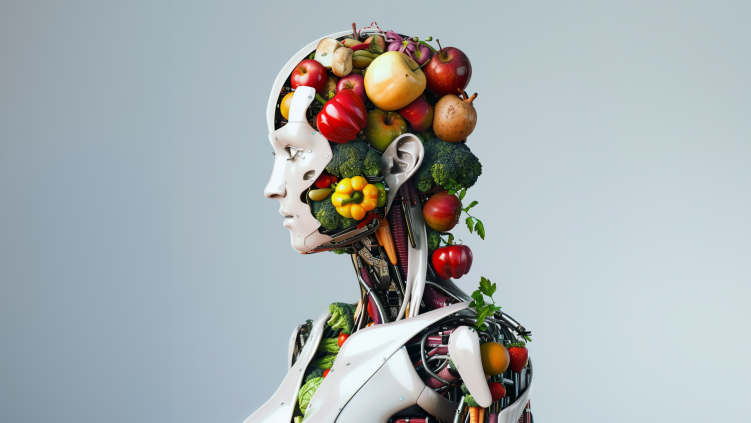
If you’re worried about the rising influence of AI systems you have trouble understanding, let alone fixing, Kasia Chmielinski has an interesting potential solution: data nutrition labels. Just like food labels allow us to inspect ingredients before we eat, Chmielinski’s Data Nutrition Project aims to provide transparency into the datasets that fuel AI models. In a compelling TED talk “Why AI Needs a Nutrition Label”, Chmielinski explores how a lack of insight into AI ingredients could lead to societal harms if left unaddressed.
What are those societal harms? The recent Netflix movie Atlas seems a touch over-the-top to my mind (but hey – who knows? 🤷) but for a speculative take on AI risks, check out the AI dilemma – by the team who brought you the Social Dilemma it’s well worth a watch.
Keen to get started on your nutrition training? Two of the best primers we’ve seen are this wonderful interactive from the Financial Times’ Visual Storytelling Team, Generative AI exists because of the transformer or this excellent (though lengthy) jargon-free explanation of how AI large language models work from ArsTechnica. Bon appetit!
Excuse Me, Is There AI in That?
The pendulum swings…. fresh off the breathless hype cycle of the various developer conferences and releases by OpenAI, Google, and Apple, there are signs that people have had enough of this whole AI thing thanks very much. From Jennifer Coolidge asking to speak to a human (spoiler: she already is), to Dove taking overt positions on AI in their advertising, to new anti-AI creative portfolio platforms – this is probably a very healthy thing and perhaps overdue. More from the Atlantic here.
Beyond ‘Old Wine in New Bottles’: Transformative AI in Education
Speaking of pendulums, had enough of techbros forecasting the death of traditional education (or demos like this one from Sal Khan that, while impressive, may lack nuance on pedagogy/andragogy)? If yes, can I recommend to you Fengchun Miao (UNESCO Chief of the Unit for Technology and AI in Education) as an excellent follow in the AI x Education space? Miao argues that current AI pedagogy is a bit thin/old wine in a new bottle – “targeting the personalised memorisation of factual knowledge” vs things more uniquely human per this great call to action from Rose Luckin (UCL) last year (Yes, AI could profoundly disrupt education. But maybe that’s not a bad thing). To that end, Miao offers paths forward from Artificial (Un)Intelligent pedagogy – see pic below.
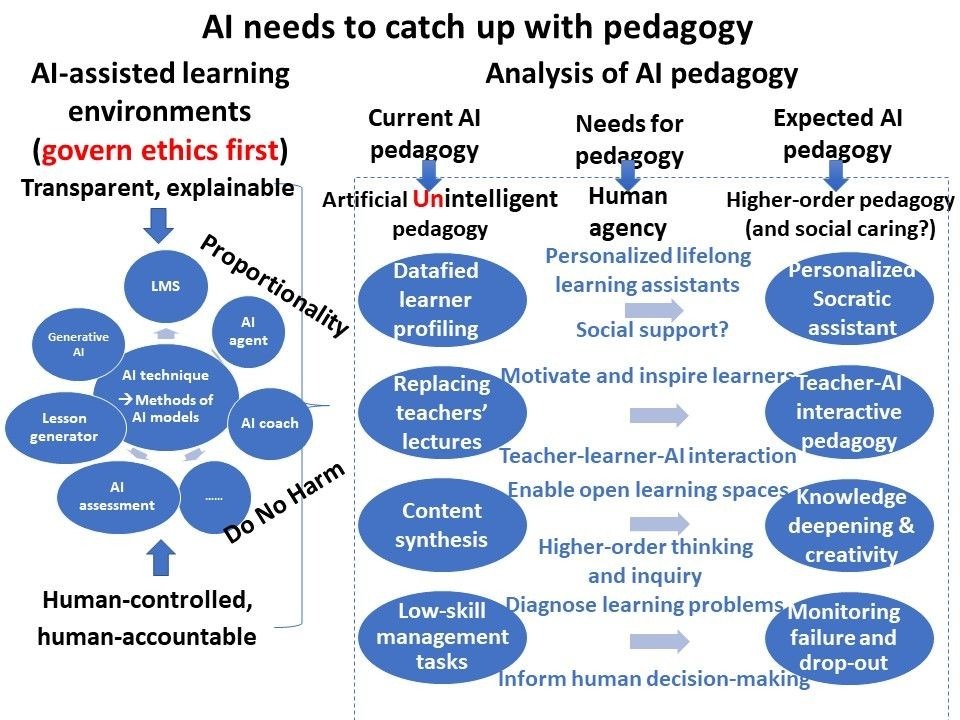
AI needs to catch up with pedagogy (Miao, 2024)
With that in mind, I always enjoy reading about exemplars like feedback agents that help time-poor educators “provide timely, constructive, and supportive feedback” which is anchored back to rubrics and so task/outcome specific – and allowing people to work effectively with “large and diverse staff teams, tight deadlines, and sizeable cohorts”. Essentially, if you like things like Grademark/you’ve ever felt guilty about skimping on student feedback (I know I have), you’ll love hearing about how generative AI can make personalised feedback at scale more consistent and efficient #winning
While we’re here – if you have other exemplars you can share, I’d love to hear more. After all, it turns out that even simple prompts can be powerful. Take the prompt behind Ethan Mollick’s Frameworks GPT (thinking framework GPT here) or even this wonderful workflow from Allie K Miller. “Explain [hard concept] in 5 words. Then describe it as if you lived on Planet Honest.” Example: Antimatter – “regular matter’s explosive evil twin” 😂
Educating for an AI Future: Stuff, Skills, and Soul
I’ve had numerous conversations with people over the last year or so about the future of both HE l study and universities themselves. It’s hard not to when dealing with as wide-ranging, profoundly impactful, and relentlessly evolving* change as AI is bringing to us in …well, everything but for today let’s focus on HE – starting with educators.
In an excellent piece for the Chronicle, Beth McMurtrie suggest that educators are sorting themselves into two main camps where “some are riding the AI wave. Others feel like they’re drowning” – with another, 3rd potential third camp of those who are ignoring AI altogether.
Wherever they/you find yourself, McMurtie speaks to a consensus that educators are feeling unsupported in navigating this challenge, leaving many struggling to adapt their teaching while maintaining academic integrity in the face of widespread AI use and misuse by students. On that, how about students then…
Because this goes deeper – one of HE’s core functions/businesses is to provide students with educational experiences that foster intellectual growth, skill development, and to prepare them for future endeavours – career or otherwise. This raises big questions unique to this moment – like “what do we really want students to learn in an AI world?” University of Sydney’s Danny Liu posits a triad of “stuff” (disciplinary knowledge), “skills” (competencies like critical thinking), and “soul” (deeper human values defining one’s essence) as the answer. Just imparting stuff and skills is insufficient when AI can mimic both, he argues. Universities must forge graduates with an ingrained “soul” – the curiosity, compassion and sense of selfhood that truly equips humans to thrive alongside AI.
*Wild to think that the recently released GPT-4o is at least twice as fast as earlier models – and yet it sounds like it’ll be getting even faster very soon.
What a year for AI video and image generation!?! 👀🍿
Madness to think that this monstrosity of a video of Will Smith eating spaghetti pasta came out just a year ago. In that very short time, we have Runway, Pika, Sora, Kling – and now Luma AI’s Dream Machine.
Unlike some of the others, Dream Machine is available for use to the general public right now: https://lumalabs.ai/dream-machine (fair warning, processing time can take a while but still, fun!).
Or how about image generation? Midjourney, long a creative favourite, just snuck in a world-changing feature within the last week or so – model personalisation (see below). Long story short, Midjourney learns your tastes and creates images that align with them – great exemplar from Dogan Ural here and a breakdown from Drew Brucker (a solid follow in this space) below:
Amazing times and and lots of fun – after all, these tools lend themselves to some pretty incredible learning experiences (imagine students using video generation to visualise historical events or scientific/abstract concepts 🤩) but against this – deepfakes and the weaponisation of synthetic media for harassment, fraud, and disinformation if abused…. crazy times we live in.
The stories this week illustrate the complex tensions around generative AI – from growing skepticism and “AI-free” alternatives to awe-inspiring creative capabilities to challenging questions about educating in an AI-transformed landscape. As always, our goal is to keep you informed on the AI developments shaping HE and spark thoughtful discussion. We’d love to hear your reactions and experiences with AI in education – drop us a note with your thoughts! Until next week, wishing you a future that’s maybe a little less artificial, and a lot more intelligent. 🤖🤔🎓