
Hi
Hope you had wonderful weekends wherever you are. It’s pretty chilly in Hanoi but the air is fresh and clear – wonderful stuff so we’re breathing deep and filling our lungs with the good stuff while we can.
Anyway, enough of that, here’s a few headlines from the world of AI for your Mondays:
The Model Revolution: Major Leaps in AI Capabilities | Technical Advances 🧠
This week has been a crazy decade in AI development. Gemini 2.5 is here and it has leapt to the top of the LMArena leaderboard. Available for paid users or in the excellent Google AI Studio this thing is an absolute beast with a 1m token context window (that’s ~750k words or the complete Don Quixote – Parts 1 and 2 🤯). DeepSeek has updated their V3 model – it looks spectacular and is also free and open source – both it, and the other Chinese models releasing updates last week, are a serious challenge to the paid, proprietary models. Oh and Claude is internet-capable now.
Incredible stuff – but I’m particularly interested in the new interpretability tool that Anthropic has released that allows us to peer into “the black box” of AI cognition (tracing the thoughts of a large language model is a great video overview with a text breakdown here). This is fascinating – raising real questions of the idea that AI are just “stochastic parrots” when we learn that AI can conduct multi-step reasoning, maintain understanding of concepts across languages (suggesting an underlying, “deeper” understanding), and plan ahead. Interesting breakdown from Carlo Iacono here: Are AI Language Models Learning to Reason? Oh and there’s a new report from the Anthropic Economic Index – looking at understanding AI’s effects on the labour market and economy over time – esp. with insights from the new Claude 3.7 Sonnet model – essential reading for anyone preparing students for tomorrow’s workforce.
Beyond Aesthetics: OpenAI’s Practical Image Revolution | Creative Tools 🎨
Last week OpenAI have launched a new image generator and it’s CRAZY good. You’ve probably seen a rash of Studio Ghibli styled images from movies and beyond over the weekend (e.g., check out the Ghibli-style Tony Montana hero image at top) or a whole Lord of the Rings trailer in Studio Ghibli style. For a more detailed overview, definitely check out Tianyu Xu‘s fantastic breakdown 🤩
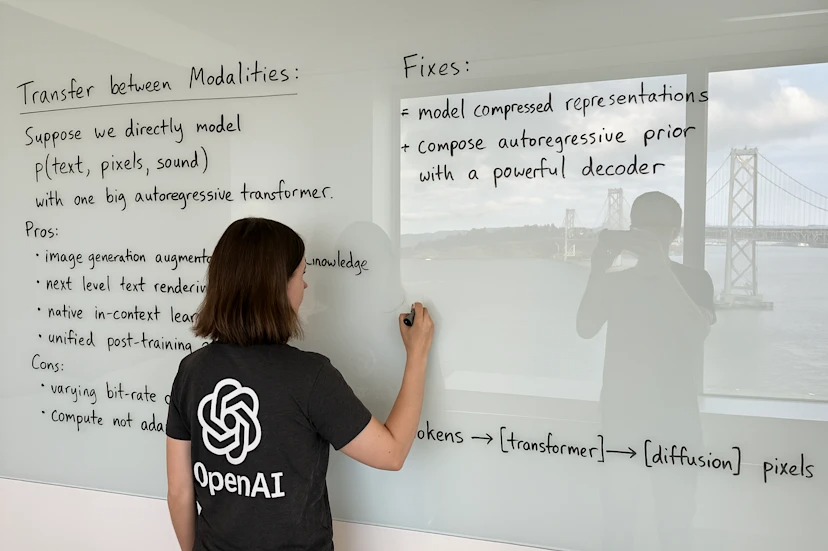
AI images can now do writing, realistic reflections, image consistency across generations… the list is
Amazing as that is – it’s barely scratching the surface because this thing is potentially very useful. While previous generators were great at creating beautiful but often impractical imagery, this gives us the “workhorse” visuals we actually need daily – infographics with perfectly rendered text, diagrams that explain complex concepts, menus with realistic layouts, and street signs with accurate details. The system excels at text rendering (finally!) and handles multi-turn refinement through natural conversation. Detailed prompts are now realised with impressive accuracy, all while the AI applies its vast world knowledge to create contextually intelligent visuals. #gamechanger
The Cybernetic Colleague: How AI Transforms Team Dynamics | Collaboration 👥
Very interesting new research from Harvard, Wharton, and P&G – a massive field experiment exploring human-AI collaboration (paper here and overview from the inimitable Ethan Mollick here). The study examined 700+ professionals tackling real product innovation challenges, comparing individuals vs. teams working with vs. without AI. The verdict? Individuals with AI performed as well as two-person teams without it! Teams still have their place tho – AI-augmented teams were significantly more likely to produce exceptional, top-tier solutions that ranked in the top 10%. This isn’t just about efficiency (tho AI users worked 12-16% faster) – it’s about transforming how we collaborate!
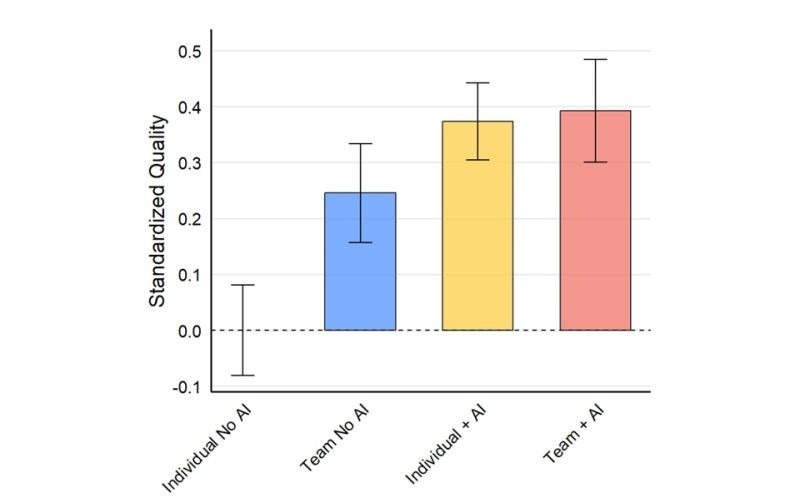
🧑 + 🤖 = 👥?
It turns out that the key to that transformation is to stop viewing AI merely as a “tool” and start seeing it as a “cybernetic teammate” that breaks down expertise silos and democratises knowledge. In an interesting twist (and quiet push back on tech-anxiety narratives), participants using AI reported significantly higher positive emotions (excitement, energy, enthusiasm) and lower negative emotions (anxiety, frustration)! For educators, this raises profound questions: if a student with AI performs like a traditional team, how should we design group projects? Could AI help reduce student stress while tackling complex problems? As the relationship between humans and AI continues to evolve, educational institutions must prepare learners for this new collaborative paradigm. 🌟
Digital Intimacy: The Psychology of Human-AI Relationships | Social Impact 💬
Speaking of relationships, interesting new insights about our emotional connections with AI chatbots from MIT and OpenAI! After analysing a whopping 40 million ChatGPT interactions and running a controlled trial with 1,000 participants, the verdict is in and it looks like “Her” is still sci-fi … for now… While most of us use ChatGPT purely functionally, a small group of heavy users actually consider it a “friend.” Interestingly, voice interactions create positive vibes short-term but potentially negative outcomes with prolonged daily use. And there’s a twist – personal conversations correlate with higher loneliness yet lower emotional dependence than non-personal chats
So what’s next for human-AI relationships? As these digital companions infiltrate our daily lives, understanding our emotional responses becomes critical (especially with horror stories around Character.ai and vulnerable youth continue to stack up). Could AI become an emotional crutch for some while remaining a simple tool for others? Are we emotionally prepared for the future where the line between digital assistant and digital friend continues to blur? This is just one part of the broader AI dilemma (which, while a bit dated now, is still very much worth a watch if you’ve not seen it) – but it is particularly insidious. As we navigate these complex emotional relationships with AI, the physical embodiment of intelligence adds yet another dimension to consider…
Physical Intelligence: Robots Enter the Mainstream | Emerging Tech 🤖
We haven’t mentioned robots for a while here but they’ve been making quiet, steady progress – the newest Atlas from Boston Dynamics can bear crawl, breakdance, do cartwheels, combat roll… nuts. There have been whispers that robots are coming to homes near your in 2025 for a while and, while there are things like this video of a robot malfunctioning, we definitely want to get this right before welcoming them into our homes. Otherwise we might find ourselves on the wrong side of this kind of exchange: “I need your clothes, your boots, and your motorcycle”.
For HE, physical AI introduces entirely new dimensions to consider. Engineering and computer science departments are already incorporating humanoid robotics into curricula, but the implications extend much further. Healthcare education could soon include training alongside robotic assistants that simulate patient interactions. Design programs may need to incorporate human-robot interaction principles as standard elements. Even campus operations could transform – from robotic teaching assistants handling routine student queries to autonomous research assistants managing dangerous lab procedures. 🤯
The AI revolution isn’t just accelerating – it’s fundamentally transforming how we create, collaborate, and connect. 🚀 From Gemini’s massive context window to OpenAI’s practical image generation, these tools are shattering previous limitations. The research suggests AI teammates boost performance while reducing negative emotions, yet our growing emotional attachment to digital assistants raises profound psychological questions. Meanwhile, robots continue their steady march from labs toward our homes. For HE, the implications are unavoidable – we must prepare students not just to use these technologies, but to navigate the complex cognitive, creative, and emotional landscape they create. The institutions that thrive won’t be those asking if AI belongs in education, but those actively reimagining what education means in an AI-augmented world. The future isn’t coming – it’s arrived last week. Are our classrooms ready? 🤖🎓